Home Author
Author

Toon Lambrechts

Bulgaria does not exactly correspond to the image of a new life in Europe that refugees carry with them. But the country shares a border with Turkey, and is therefore an excellent loophole to avoid Greece on the way to Europe. The last two years the influx of refugees has tenfolded, an increase Bulgaria was not prepared for..

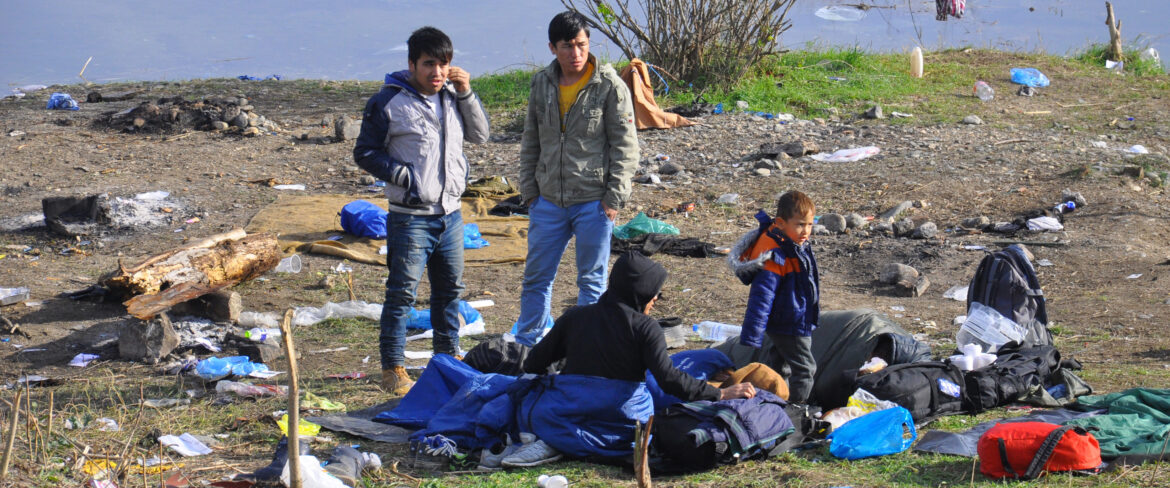
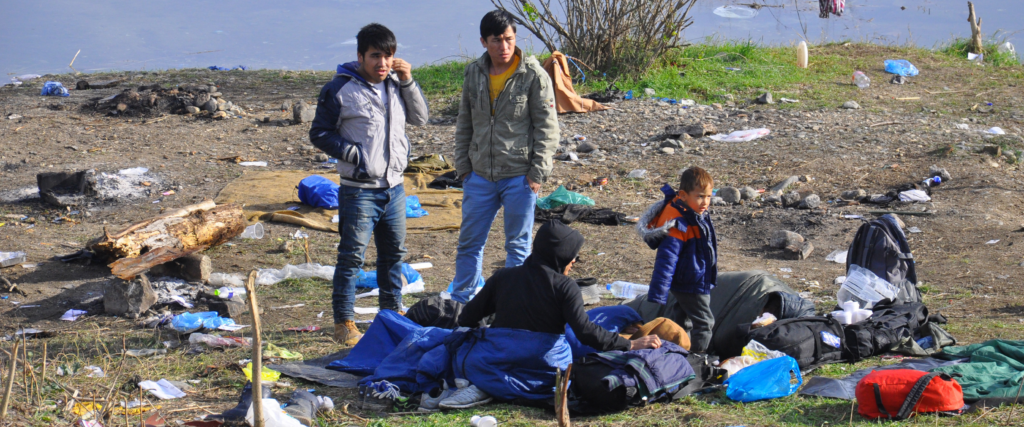
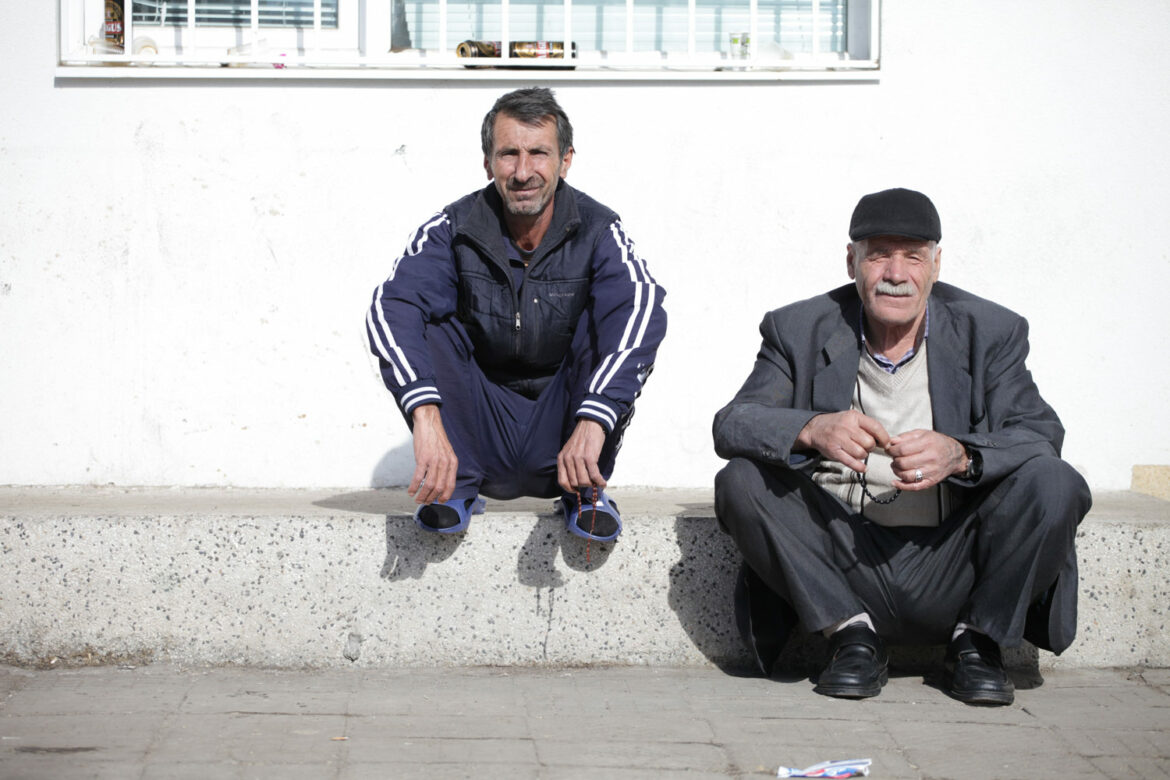
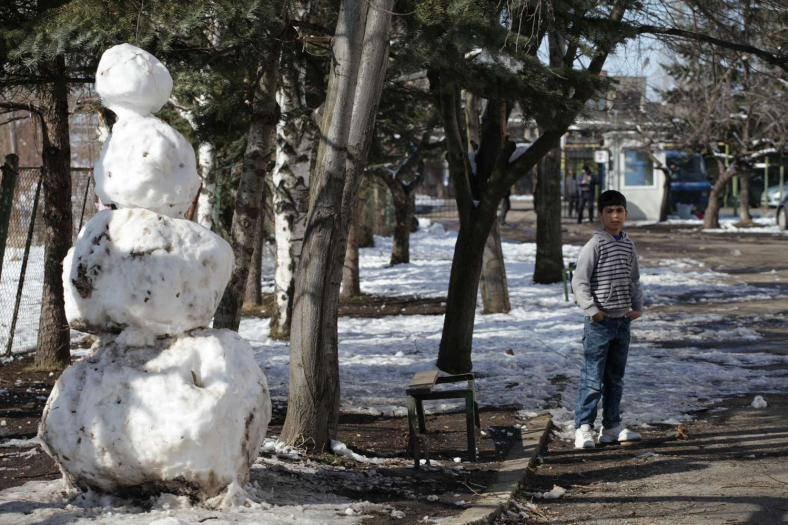
Finding the refugee centre Voenna Rampa is no easy task. The camp, a former technical school, is tucked away somewhere in the decrepit industrial outskirts of the Bulgarian capital Sofia. The guard at the gate reacts suspiciously, but once inside  the atmosphere is relax. A group of refugees play football, the rest sits outside, waiting in the winter sun. Someone built has a snowman, probably for the first time in his life.

© Toon Lambrechts

© Toon Lambrechts

Language issue

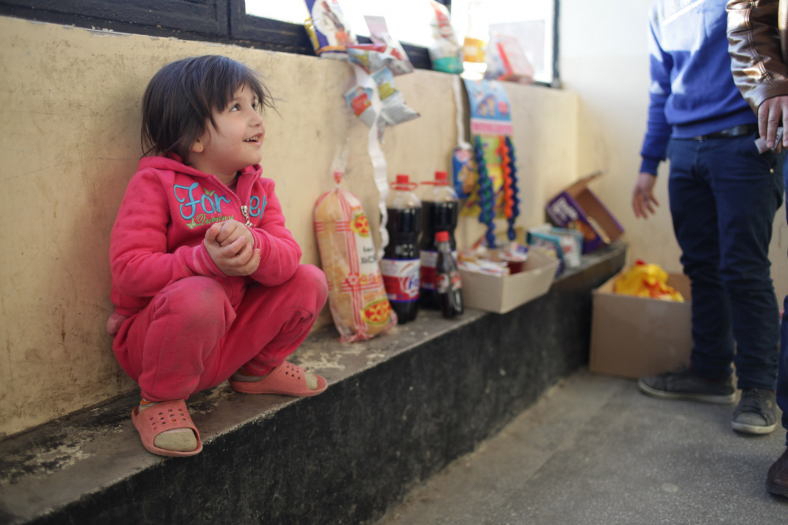
Yet, this forced cohabitation in Voenna Rampa doesn’t run particularly smooth. Language is clearly a major barrier. The guards and the staff barely speak English, let alone one of the languages of the refugees. In all of the camp, there is but one translator who speaks Bulgarian and Arabic.

That’s not much for six hundred people, admits commander Zanev, the head of the camp. ‘We are not prepared for this. Previously, there were perhaps a few hundred refugees annually in Bulgaria, now several thousands. Mainly Syrians, but also people from Iran and Afghanistan, and Africans. That is completely new to us. I hope it stops, within a few years’, sighs the man.

Previously, there were perhaps a few hundred refugees annually in Bulgaria, now several thousands.

Chairy Bilal and Nurshan Fateh are a young Syrian-Kurdish couple from Damascus. Three months ago they left Syria. After a few days in Turkey they crossed the border with Bulgaria, a 24-hour walk through the woods of Strandzha, a large forest in the border region near the Black Sea.

Chairy is glad that he has found security here. ‘But life here in this camp is quite boring. They tell us that it will take about six months to get our papers done. Once I have them in my hands, we’ll move on. What should I do here in Bulgaria?’

A good question. Bulgaria, until further notice, remains the poorest country in the European Union,  a place where many young people leave towards Western Europe, rather than a country where a new life is waiting. But the efforts of Greece to seal their land border with Turkey and the increased migration pressure reversed the roles. Suddenly, Bulgaria received an unprecedented wave of migrants.
© Toon Lambrechts

© Toon Lambrechts

In 2013, more than 9,000 refugees crossed the border, ten times as many as the year before, all on their way to Western Europe. Hastily, the government tried to cope with the flow of people, hosting them in former schools and barracks. But the lack of money, expertise and political will made things go wrong.

Put to shame

Harmanli, a friendly but somewhat sleepy town not far from the Turkish border, made the headlines of the international media by the end of 2013. Pictures of Syrian refugees with nothing more than a tent canvas to protect against the Bulgarian winter cold went around the world. Their first experience of Europe resembled suspiciously to what they thought to have left behind.

Their first experience of Europe resembled suspiciously to what they thought to have left behind.

The failure of Bulgaria to provide the refugees a decent shelter worthy of its name was out on the street. Today, the former military area still don’t  looks like a holiday destination, but the situation has clearly improved. The tents have been replaced by container houses, the roads are paved. Parts of the old barracks were renovated with the support of Europe.

Director Marko Petrov is eager to show the progress that has been made. He takes me to the new dining room and kitchen. Everything wears the blue and yellow EU-label. The laundry facility shines like new. Installed just a week ago, with support from a Dutch ngo. ‘Now Harmali hostes about 2000 inhabitants, 1600 them are Syrians, the rest from Afghanistan and Iran. That’s a lot, we’re almost at our limit, though there are plans to expand Harmanli. This time, we are ready for it.’

© Toon Lambrechts

Half collapsed ceilings in the toilets, insulation hanging loose, moist rooms with mould spots…

© Toon Lambrechts

In one of the rooms of the former barracks, Gemile Hame resides with his wife and two children. He shares a room with his friend and his family. ‘This is my home, there is his’, Gemile laughs, pointing at two cubes of sheets and sticks set up in the already quite confined space.

‘I fled Syria to give my children a better life. Bulgaria is a poor country, it has hardly something to offer to its own citizens.’

Gemile, coming from Hasaka, lives already for five months in Harmanli. He has not the slightest intention to stay in Bulgaria. ‘I fled Syria to give my children a better life. Bulgaria is a poor country, it has hardly something to offer to its own citizens.’ A statement that the two Bulgarian staff members assent immediately.

Like many others Gemile passed the Turkish-Bulgarian border through the forests of Strandzha, and traveled straight to Serbia. But the Serbian border police caught him and handed him over to their Bulgarian colleagues. Gemile was detained in the detention centre Bustmansi near the Sofia Airport. Later, he was reunited with his family, now he is awaits his for papers.

When he finished his story, he takes me around to see a slightly different face of Harmanli. Half collapsed ceilings in the toilets, insulation hanging loose, moist rooms with mould spots… Clearly, much more European support will be needed before Harmanli can provide really decent accommodation.

In one of the classrooms thirty people listening to an English lesson. An initiative of the refugees themselves, says Gemali. In a room on the same corridor a friendly family wants to meet us. Their disabled son is very excited when he notice the visitors. If I ask the father how managed to cross  the border with a child who can barely walk he replies that he has carried  his son all the way…

Poor preparation or ill will?

Not a single migrant even considers the idea of staying in Bulgaria. The country seems to be as far as can be from the image that the rest of the world holds up about Europe. But Bulgaria is an EU member state, and therefore subjected to the Dublin Convention, which stipulates that a refugee must apply for asylum in the first country of arrival.

‘The government was not ready for the influx of 2013 because they didn’t prepared themselves.’

So those who do not manage to slip unnoticed through Bulgaria towards Serbia and get arrested by the border police must submit an application and are stuck, at least for a while, in a country where they don’t want to be and that doesn’t want them to be there.

The entire procedure to file an asylum claim is an exercise in bureauratic stiffness, with major legal gaps. As with the physical reception of refugees, the system is unable to cope with the recent influx. An unnecessary failure, says Borislav Dimitrov. ‘The government was not ready for the influx of 2013 because they didn’t prepared themselves. The information that this would happen was on the table. Everyone knows what is happening in Syria and Iraq, a conflict just one country for Bulgaria.’

Dimitrov is part of Friends of Refugees, a platform that defends the rights of refugees in Bulgaria. The images of Syrians  lost in the woods of Strandzha and the situation in the Harmanli Camp spured them to action.

Back to Turkey

‘A fence has not worked in Greece, why should work for Bulgaria?’

The response of the Bulgarian government to the swelling flow of refugees has been quite predictable: Close the border. Just like in neighbouring Greece, the authorities started  with construction of a fence on the border with Turkey. Furthermore, an impressive police force was deployed to the Bulgarian-Turkish border, only to be replaced last month by the army.

All this show of strength has very little effect. The number of asylum applications in 2014 differs slightly from the figure of the previous year. ‘A fence has not worked in Greece, why should work for Bulgaria?’, Borislav Dimitrov asks himself. ‘There is a plan on the table to build an additional fence of 90 km at a cost of 90 million leva (approx. 45 million euros).’

‘For a country with a limited budget such as Bulgaria, it is a shame to squander money on a so-called solution that has already proven its ineffectiveness elsewhere. But no one talks about it. It will only make the passage more dangerously. People will hop over the border at even more remote places, or perhaps by the Black Sea.’

© Toon Lambrechts

© Toon Lambrechts

Not so much the fence, but the violence at the border deters people. Many migrants testify how they were beaten and ill-treated by the Bulgarian police, both at the border and elsewhere in Bulgaria. Police officers did not hesitate to steal money, phones and other valuables. Moreover, the border police is driving people back into Turkish territory after their arrest on the Bulgarian side of the border.

This practise, called “push-backs” are illegal under both international and under European law. ‘We hear many stories of push-backs. What would be the use of so many police at the border otherwise? What should they be doing there? The government denies that push-backs happen. They claim that they only want the refugees to use the regular border crossings. That’s nonsense, of course. Without documents you’ll never get to pass the Turkish border posts, and also in the embassy of Bulgary in Turkey it is impossible to apply for asylum.’

Tradition of migration

It is an uncomfortable situation. The refugees do not want to stay in Bulgaria at all, but find themselves trapped  by the Dublin Convention. At the same time, the Bulgarian government is not keen to absorb large numbers of migrants. An integration policy, or even any plan to support people after they receive their status as asylum-seekers, is virtually nonexisting. This is problematic, and makes it even harder for people to imagine something like a future in Bulgaria.

But does it make sense to invest in an integration policy if everyone wants to move on as fast as possible? ‘Obviously, the possibilities to build a new life here are few, that’s true. But with a little more effort to integrate refugees in our society, a certain number of people would stay. Some of them are simply tired of travelling.’

‘It’s not just a lack of experience which holds back the Bulgarian government to do so, the intention is simply not there’, said Dimitrov. ‘It suits the government well that no one wants to stay, it gives them an excuse not to work on integration. But it is as much a reaction from our government against the lack of European solidarity.’

The only rise in the crime statistic is due to the violence against migrants.

Not all Bulgarians are so happy with the migration wave of the past two years. Politicians are getting out a harsh rhetoric. MPs from Ataka, one of the two nationalist parties, talk about “terrorists” and “criminals” who came to steal away  Bulgaria’s scarce jobs. But the only rise in the crime statistic is due to the violence against migrants, especially in 2013, but also last year.
© Toon Lambrechts

© Toon Lambrechts

‘The state, together with the media, maintain a hard discourse when it comes to refugees. Only the Syrians are seen as genuine refugees. The rest, especially the Africans, are looked upon as merely economic migrants with no right to asylum. Migration is new to Bulgaria, so people form their opinions based on the information that the state and the media provide them. In this climate it may not come as a surprise that these hate crimes happen.’

Also in this dossier:

‘Europe, still one country ahead’
Greece: The starting line
MO*reporter undercover in human trafficking in Macedonia
‘I saw on TV how everyone was leaving Kosovo, so I went myself’
‘Do you know the way to Hungary?’
‘Welcome to Hungary (But not wholeheartedly)’
‘Human traffickers never keep their word’
Why some refugees do return to the hell of their homeland

Yet something has changed in the way in which migration is portrayed, thanks to the campaigns of Friends of Refugees and UNHCR to draw a parallel with the experience of migration of the Bulgarians themselves.

Almost every  Bulgarian family has some members making a living somewhere in Western Europe as a migrant. ‘If David Cameron calls the Bulgarian immigrants in Britain profiteers, we are deeply offended. But now we are in the British position, we react in exactly the same way. However, Bulgaria is not an unwelcoming country, we have a tradition of migration ourselves. The support which our initiative Friends of Refugees received surprised everyone.’

This report was produced with the support of Fonds Pascal Decroos.
0 comments
0 FacebookTwitterPinterestEmail

A narrow dirt road winds its way to the vineyards of Kyriaki Hatzisavva, at the outskirts of Alexandroupoli in Evros, Greece’s borderline region with Turkey.

The flanks of the hills are still as black as a year ago, like a mourning veil.

Amidst the vineyard, a single olive tree offers shelter from the sun. Most of the vines did not survive the fire, leaving a just a few to sprout again.

“You can clearly see how the flames jumped from one place to another,” says Hatzisavva, pointing to the hilltops.

“Only a small patch of greenery below has escaped unscathed. Behind them, the same picture, a blackened landscape from the sea up to Soufli, almost fifty kilometres further inland.”

Unstoppable blaze

On 19 August 2023, a fire broke out in the village of Melia. The fire brigade got control over it, but flames spread to two other places. The timing could not have been worse. Like this year, Greece was suffering from a persistent heatwave and prolonged drought.

It’s hard to fully grasp the scale of the forest fire that raged across Evros last year, destroying 96,600 hectares of land, an area larger than New York City. Much of Evros consists of pastures and forests, including the Dadia forest reserve. Photo: Toon Lambrechts

The meltemi summer wind, blew hot air from east to west, driving both fire fronts together into an uncontrollable inferno.

For 17 days Evros burned in the largest wildfire ever recorded in Europe.

Some 96,600 hectares (966.000 m2) of land went up in flames, including a large part of Dadia forest. Twenty people, all of them refugees, caught up on the route from Turkey to Greece, lost their lives.

Hatzisavva simply cannot forget those days.

On lower-lying areas at Kyriaki Hatzisavvas’ vineyard, spring brought high-standing grass again, by now already withered by the heat plaguing Greece for months. Photo: Toon Lambrechts

“The fire started about 25 kilometres away. I immediately had a bad gut feeling.

“The army had sealed off the hills, but I managed to reach my vineyard through the back roads. First, I tried to plough the grass fields to improvise buffer, but the bone-dry ground was hard as concrete. My cousin, a farmer as well, was nearby, evacuating his sheep.

“Suddenly the fire was everywhere. I tried to get the dogs together, but they were nowhere to be seen. I got away just in time. The next day I came back […] When I saw that the vinery had been spared, and the dogs were still alive, I burst into tears.”

Brown sludg

Hatzisavva had witnessed fires before, but not of this size and intensity.

“Problems have been going on for a long time. In 2022, not a drop of rain fell during spring and summer.”

A day after the interview, rain comes in the region.

A swim ban was enforced for beaches across the Alexandroupoli coastline following the downpour of brown sludge from drainage channels. Photo: Toon Lambrechts

Not the gentle type of rain the scorched soil was so desperate for, but a summer violent storm.

In barely five minutes, water gushes down the slopes, racing downwards. Shortly after, the drainage channels near Alexandroupoli spew brown sludge into the sea with an immense force, carrying branches, stumps, and the occasional whole tree with it.

The sudden downpour has free rein, without trees and shrubs to hold soil in place. Forest topsoil, slowly built up through years of growth and decay cycles, is lost in a few hours.

Floods are common in the aftermath of wildfires for affected areas. Photo: Toon Lambrechts

It is difficult to predict the impact of a changing climate, says Hatzisavva.

“But I refuse to accept that this will be the new normal. I will replant everything, even if it takes years.”

Despite her determination, a sense of loss prevails.

“I used to roam these hills with my grandfather while herding his goats. I want to teach my daughters the paths. But nothing remains of these places.”

Fires used to spread only over the forest floor, but now flames can reach the treetops more easily,” says Theodora Skartsi, an ecologist working at Dadia Natural Park. Photo: Toon Lambrechts

The goat paradox

Climate change aside, there are more factors rendering Greece prone to wildfires.

Budgets for forest management and firefighting were slashed during austerity years, while prevention and forest maintenance remain underfunded.

Mediterranean forests tolerate fires. In fact, they are integral to their regeneration cycle. But the disappearance of traditional forest management practices has taken its roll.

Forests like those in Evros are particularly vulnerable, explains Theodora Skartsi, an ecologist and manager of the Society for the Protection of Biodiversity of Thrace.

She works at Dadia Natural Park, a vast forested area known for its populations of prey birds, including vultures.

“Dadia, and by extension all forests in the region, are a result of human activity. They consist of a patchwork stitching together Mediterranean oaks forests, native black pine, pines plantations, and open meadows. In recent decades, the forest undergrowth has increased significantly, and this has led to changing fire patterns.”

Forests are growing denser due to the mass exodus from the Greek countryside and the decline of livestock farming.

The disappearance of goat farming and agriculture in the mountainous regions of Evros is causing villages to empty, says ecologist Theodora Skartsi. Photo: Zoe Thomaidou

While in many places in Greece goat farming is notorious for overgrazing, undergrazing is an issue in Evros, according to Skartsi.

“Native wildlife like deer cannot compensate, and manually removing dense undergrowth over such a vast area is simply impossible for the already understaffed forest management.”

Skartsi says the disaster extends beyond the forest. The entire region was affected by the wildfires.

“Dadia and other villages in central Evros have been losing inhabitants for decades. Now the collective trauma of the fire has been added up to the economic decline […] depriving Evros of job opportunities in nature tourism, desperately needed to save villages from abandonment.”

“A shred of your soul”

That sense of abandonment hangs palpably over Kirki.

After his home was burnt down, Theodoros Eleftheriadis moved to another house in the village, but his mother never returned to Kirki and not long after, she passed. “She was already of advanced age, but the stress and grief certainly played a role. She’s not the only one, two other elderly people who lost their homes died shortly after the fire,” he says. Photo: Toon Lambrechts

The village, nestled on a mountainside 20 kilometers away from Alexandroupoli, is a natural gem, but completely deserted.

Theodoros Eleftheriadis, a spry septuagenarian raised in Germany who returned to Kirki as an adult to live with his mother, recalls the days when the village was full of life.

A house in Kirki affected by the fire marked with red (complete destruction) by authorities for compensation rankings, later changed to level 2 (partial destruction), although it has no roof. Photos: Zoe Thomaidou

“Twenty years ago, about 400 people lived here, there was a school, a police station. Now only 40 permanent residents remain, mainly elderly.”

Kirki was badly affected by the fire, as the black hills testify.

“The will to revive the village is there,” says Kirki local Theodoros Eleftheriadis, “but without meaningful support by the government our chances are limited.” Photo: Zoe Thomaidou

“The meltemi drove the flames in our direction.

“At some point, the fire brigade was called to Alexandroupoli to save the city’s hospital, while Kirki was evacuated,” Eleftheriadis recounts.

He returned to Kirki immediately after the fire, finding his home vanished.

“You can’t possibly understand if you haven’t lived through it. A house is so much more than stones, it’s a living place, a place full of memories. It’s like losing a piece of your soul.”

Eleftheriadis knew the forests around Kirki like the back of his hand. He single-handedly created a network of footpaths and immediately after the fires started cleaning them and restoring signage.

“We are keen to make the village known for its beauty even after the wildfires destruction,” says Kirki’s Cultural Club president Vassiliki Pantelidou (front left). Here, shot of the lunch table Kirki locals insisted on hosting after the interviews. “Hospitality runs in our blood, and we remain much more than just a fire-affected community,” they say. Photo: Zoe Thomaidou

“I feel a strong connection to this place. I see it as my duty to remain hopeful. Nature will recover from this blow. Whether Kirki will get back on its feet is another question.”

“New reality forced upon us”

Eight years ago, Georgios Hatzigeorgiou moved to Avantas.

It was love at first sight; one he was keen to share with others. Elected community president, he started a project to open the village forests to hikers and climbers.

“We worked for four years on a network of hiking trails and climbing routes. We were ready to start receiving visitors, school excursions,… And then this happened. Our forests, hopes, plans…everything went up in smoke.”

Georgios Hatzigeorgiou decided to leave Avantas after the wildfires. “I am not the only one. Many people chose Avantas because of a certain connection with the woods. Beekeepers, cattle farmers… For them, just like for me, there is little left here.” Photo: Toon Lambrechts

It was a close call for Avantas. The fire encircled the village.

“When it became clear that the flames were coming our way, I gathered people to save what could be saved. People who knew the forest well, or with agricultural equipment. The fire brigade was busy elsewhere, we were on our own.”

Locals rushed to cut down a piece of pine forest around the village.

“Otherwise, the fire would have spread to the houses,” Hatzigeorgiou explains.

“It was like hell on earth.”

Now, a year later, living in the aftermath of the fires remains a tough task.

“For months, an intense smell of ash lingered over our village. Even now, the wind still brings that smell sometimes. From day one, we were forced into a new dark reality.”

He believes that the forest will recover eventually.

As per official guidelines, active reforestation is only necessary in specific areas where there have been fires during the previous years. “Elsewhere we will see how the forest reacts, and take it from there, ” ecologist Theodora Skartsi explains. Photo: Toon Lambrechts

“But if the land burns again in the next decade, it is over. The forest cannot cope with that. What worries me most is the lack of water. It rains less and less, but people don’t seem to be aware of that.”

Grim future for beekeeping

The botanical knowledge of beekeeper Giannis Kalogiantsidis is impressive.

As if it were a menu, he lists the flora his bees feast on.

“I would bring my beehives up to the mountains at the end of February. In spring, almond trees, Greek strawberry trees, acacias, and field elms bloom, in addition to a wide variety of spring flowers. Later, in the summer months, oak blossoms, later heathen. All that wealth was wiped out in a few days.”

“Evros is, or rather was, one of the richest regions in Greece for beekeeping, with different types of forests, open areas and pastures,” says beekeeper Giannis Kalogiantsidis. Photo: Facebook

Kalogiantsidis represents the Evros beekeepers’ association. In total he and his colleagues lost around 1600 hives in the fire.

But the real disaster came later: loss of worker bees, lack of nectar and pollen, and persistent drought killing off many more colonies.

“I can’t give an exact number, but about 10,000 hives perished.”

He sees little future for beekeeping in the region.

“Some flowers and low shrubs are growing again, but the trees are gone, at least for a decade. They were the main source of food for bees.”

Despite promises made, Kalogiantsidis does not count on government support.

“They simply have no interest in beekeeping. The official compensation for each hive lost in the fires is 65 euros. A joke. Many people simply do not understand the importance of bees.”

Generations’ work lost within hours

Even a year later, it remains difficult for Dimitris Adamidis to look at what the fire did to Konos, his family’s olive grove named after the surrounding hills.

Dimitris Adamidis avoids pruning his trees for now, to give them time to recover naturally. “But any meaningful recovery will certainly take a decade, if not more, while climate conditions are becoming increasingly hostile,” he says. Photo: Toon Lambrechts

“Out of 3,000 olive trees, only fifteen have come out of the fire unscathed. Some spots are not more than a graveyard of trees.”

His family has been growing Makri olives, an ancient local variety, for four generations.

However, recent years have been difficult due to persistent heat and drought.

“Olive trees are resilient, but even the Makri variety yields little under such conditions. We were forced to harvest earlier in the year, and […] resorted to harvesting at night, to protect the aroma of olives from the heat.”

Any harvest is out of question for the near future.

“In a few hours, the work of generations went in flames. The grove could have been saved, but the fire brigade chose to intervene elsewhere,” he says commenting on the “anything but adequate” response by authorities.

Overwhelmingly, the community sentiment is that the government fails to take the threat of wildfires seriously.

“Compensation for affected growers is almost an insult. I realise we were on our own, then, while the fire was raging and now in the aftermath,” says olive grower Dimitris Adamidis. Photo: Toon Lambrechts

Lost in a new landscape

The sense of displacement that resounds so strongly through these locals’ stories is best described by a term coined by Australian philosopher Glenn Albrecht.

Albrecht introduced the neologism while researching on distress caused by environmental changes in open-pit mining areas in New South Wales.

Formed by the Latin word solacium (comfort) and the Greek root -algos (pain), solastalgia encapsulates the loss of identity, memory and knowledge linked to a drastically altered landscape, the mourning for a world that was.

“This olive grove is more than a farm or an entreprise. It is our way of life, our family history. I learned to walk among these trees as a child. But when I arrived the next day after the fire, I no longer recognised the place. For the first time, I was lost among the trees I grew up with, a profound feeling I will never forget,” says Dimitris Adamidis. Photo: Toon Lambrechts

Solastalgia accurately describes the local sentiment nestling in Evros, amidst blackened land.

“For more than a month after the fire, I avoided the hills. I couldn’t bring myself to face this disaster.” Adamidis says.

“When I first drove towards Alexandroupoli through the charred forest, I pulled over and burst into tears,” he adds, pausing for a moment.

“I’m an optimistic person, really. But everyone has their limits. Everything that made this place unique has been reduced to ashes. And I’m scared that whatever is left will follow suit.”

*Toon Lambrechts is a Belgian journalist based in Thessaloniki. This is a translated edited version of the article published in the Dutch environmental magazine Down to Earth.

0 comments
0 FacebookTwitterPinterestEmail

The dramas in the Mediterranean Sea at the beginning of April 2015 put migration back high on the European agenda. For a moment anyway, because it is not the first time that refugees have paid with their lives for the journey to a better life.

But the sea is not the only gateway to Europe. Tens of thousands of people are trying to reach Western Europe from Greece and Bulgaria. Their journey takes them through Macedonia and Serbia as far as the Hungarian border. This so-called Western Balkan route is on its way to becoming an important gateway to Europe. Since 2012, the flow of people through the Balkans towards Europe has continued to increase, and there is no indication that this will change quickly. In Turkey, many thousands of people are ready to take their chances. Mainly Syrians, but also Afghans and refugees from Somalia and Eritrea. At the same time, the ongoing economic crisis in Greece means that many migrants, some of whom have lived there for years, are leaving the country to seek their happiness to the north.

The Balkan route is the story of a stream of people on their way to what could be a better life. It is the story of a journey through countries such as Bulgaria, Macedonia and Serbia, which, unprepared and unwillingly, suddenly face an unprecedented influx of refugees. It is the story of the brothers Ashraf and Kareem, who are probably still waiting in Belgrade for a chance to cross the border. It is the story of Omar, who is starting a new life in Austria, but also of Nazim, who got disappointed and got back. It is the story of how hope seeks a way through a labyrinth of borders, how people on the run are both vulnerable and invincible at the same time.

0 comments
0 FacebookTwitterPinterestEmail